Why Radon Retest Verification Matters for Your Home's Safety
The Hidden Danger That Lingers
When I first started working in radon mitigation over a decade ago, I noticed a pattern. Homeowners would install a system, get a passing test result, and assume the problem was solved forever. They would close the file and move on. But radon gas is not a one-and-done issue. It shifts with the seasons, with changes in soil moisture, and even with how you use your home's ventilation. That is why radon retest verification is not just a technical formality. It is a critical step in protecting your family's indoor air quality over the long term.
St. Louis radon levels can vary widely from one neighborhood to the next. Some areas have high uranium content in the underlying bedrock, while others have more permeable soil that allows radon gas to move upward more freely. A single test, even a professional one, gives you a snapshot of one moment in time. But what happens when the ground freezes in January or when a new construction project changes the soil pressure around your foundation? That is where a thoughtful approach to radon measurement and follow-up testing comes into play.
What Radon Retest Verification Actually Means
Let me be clear about what we are discussing. Radon retest verification is the process of confirming that a radon mitigation system continues to perform as intended after its initial installation. It is not the same as the initial radon testing you did before deciding to mitigate. That first test told you there was a problem. The retest verification tells you whether the solution is still working.
In practice, this involves placing a radon detector in the lowest lived-in level of your home, usually after the radon system installation has been completed and the system has been running for at least 24 hours. The detector remains in place for a specified period, often 48 hours to 90 days depending on the type of device and the testing protocol. The results are then compared against the EPA's action level of 4 picocuries per liter. If the post-mitigation test shows levels below that threshold, the system is considered effective. But the story does not end there.
I have seen homes where a system passed the initial retest but failed a year later because of a cracked suction pit or a fan that had lost efficiency. That is why responsible radon remediation companies recommend periodic retesting, not just a single verification. Radon retest verification should be seen as an ongoing commitment, not a one-time checkbox.
The Science Behind the Retest
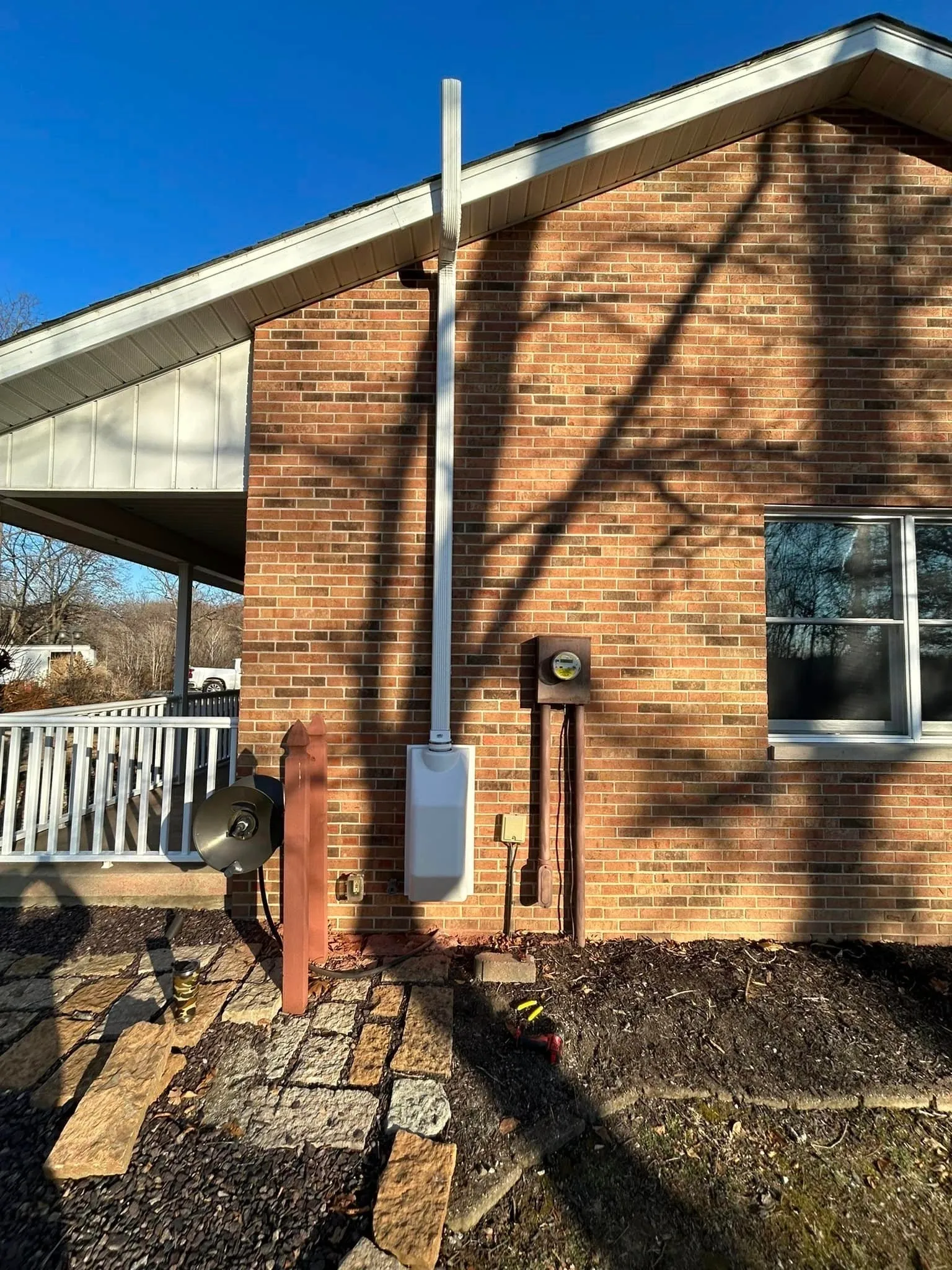
To understand why retesting matters, you need to understand how radon moves. Radon gas is a radioactive decay product of uranium, which is present in most soils. It travels through pore spaces in the ground and enters buildings through cracks in the foundation, gaps around pipes, and even through the concrete itself. A sub-slab depressurization system works by creating a vacuum beneath the slab, drawing radon-laden air away from the building and venting it above the roofline through a pipe that contains a radon fan.
But the soil is not static. Heavy rain can saturate the ground, temporarily blocking radon pathways and reducing the load on the system. Then a dry spell can open new routes. Freeze-thaw cycles can shift the soil around the suction points. Over time, the fan itself may accumulate wear, especially if it is exposed to moisture or debris. A continuous radon monitor can track these fluctuations in real time, but most homeowners rely on short-term tests for their radon retest verification. That is fine, as long as you understand that the result reflects conditions during that specific testing period.
ANSI standards provide guidelines for radon measurement protocols, including where to place the detector and how long to test. Following these standards ensures that your radon retest verification is reliable and reproducible. When I perform a post-mitigation test for a client, I always document the test conditions, the detector placement, and the duration. That way, if the next test shows a different result, we have a baseline for comparison.
When Should You Retest?
The EPA recommends retesting your home every two years, or after any significant structural change. That includes renovations that affect the foundation, new HVAC installations, or even major landscaping that alters drainage around the house. But I tell my clients to think of it like changing the batteries in a smoke detector. You do not wait for the beeping to start. You set a calendar reminder and do it proactively.
Here are a few specific situations that call for a radon retest verification sooner than the standard two-year interval:
- After a radon system installation, you should always conduct a post-mitigation test within 30 days to confirm the system is working.
- If you notice the radon fan making unusual noises or if the manometer (the liquid gauge on the pipe) shows a change in pressure, retest immediately.
- After any major earthquake or ground disturbance near the foundation, such as excavation or pile driving.
- If you replace the radon fan or any part of the vent pipe system.
- When buying or selling a home, include a radon retest as part of the inspection, even if a mitigation system is already in place.
Each of these scenarios introduces variables that can affect radon entry. A radon retest verification gives you objective data to assess whether your system is still providing adequate protection.
Common Pitfalls in Retesting
One mistake I see often is homeowners rushing the retest. They place the radon detector in a basement that has been closed up for weeks, then wonder why the result is higher than expected. For accurate radon measurement, the home should be in its normal occupied condition. Windows and doors should remain closed as much as possible during the test period, except for normal entry and exit. The EPA and ANSI standards both specify that the home should be in "closed-house conditions" for at least 12 hours before the test begins and throughout the test duration.
Another common error is placing the detector in the wrong location. It should be in the lowest lived-in area of the home, at least 20 inches above the floor and away from drafts, heat sources, and exterior walls. I have seen detectors placed right next to a radon fan vent pipe, which completely invalidates the reading because the vent pipe is exhausting radon to the outside, not measuring the indoor concentration.
Then there is the temptation to use a single short-term test as the final word. A 48-hour test can be useful for a quick check, but it is vulnerable to weather fluctuations. If you test during a week of heavy rain when the soil is saturated, you might get a false low reading. If you test during a dry, windy period, you might get a false high reading. For critical decisions like verifying a mitigation system, I prefer a test duration of at least 7 days, or better yet, a continuous radon monitor that records hourly data.
The Role of Professional Verification
While do-it-yourself radon test kits are widely available, there is real value in having a professional handle your radon retest verification. A trained technician knows how to place the detector for maximum accuracy, can check the system's physical components for signs of wear or damage, and can interpret the results in the context of your home's specific conditions. At Air Sense Environmental, we include a thorough inspection of the entire radon mitigation system as part of any retest service. We look at the fan, the pipe connections, the sealant around floor penetrations, and the pressure readings on the manometer.
I recall one job in St. Louis where a homeowner had performed his own retest and got a reading of 3.9 pCi/L, just below the EPA action level. He thought everything was fine. But when we did a professional radon retest verification using a continuous radon monitor, we found that the levels spiked to 6.2 pCi/L during certain times of the day. It turned out the radon fan was cycling on and off due to a faulty capacitor. The short-term test had simply missed those spikes. We replaced the fan, retested, and the readings stabilized well below 2 pCi/L.
That experience reinforced something I have come to believe strongly: radon retest verification is not about checking a box. It is about protecting your health. Radon gas is the second leading cause of lung cancer after smoking, according to the EPA. The risk is cumulative. Even moderate levels over many years can increase your risk. A thorough radon risk assessment should include not just initial testing and mitigation, but a schedule for ongoing verification.
Building a Long-Term Radon Management Plan
Think of radon mitigation like maintaining a sump pump or a septic system. You would not install a sump pump and never check on it again. You would test it every spring, clean the inlet screen, and replace the battery backup. The same principle applies to radon reduction. Your radon system installation is the start, not the finish.
Here is a simple framework for long-term radon management:
- Conduct initial radon testing to determine baseline levels.
- Install a mitigation system, typically sub-slab depressurization or soil suction radon, depending on your foundation type.
- Perform a post-mitigation test within 30 days to confirm the system is working.
- Schedule a radon retest verification every two years, or sooner if conditions change.
- Keep a log of all test results, system maintenance, and any changes to the building structure.
This approach gives you a documented history that can be invaluable when selling your home. Buyers are increasingly aware of radon risks, and a well-documented record of radon retest verification can be a strong selling point. It shows that you have been responsible about indoor air quality and that the mitigation system is not just a cosmetic addition.
Final Thoughts from the Field
I have been doing this work long enough to see the difference between homeowners who treat radon mitigation as a permanent fix and those who treat it as an ongoing process. The ones who stay vigilant are the ones who sleep better at night, literally. They know that their radon detector is not just a gadget on the shelf. It is a tool that gives them real data about the air their family breathes.
If you have a mitigation system in place, do not assume it will work forever. Schedule a radon retest verification today. It is a small investment of time and money for the peace of mind that comes from knowing your home is safe. And if you are in the St. Louis area, reach out to a qualified professional who understands the local geology and can guide you through the process. Your health is worth that extra step.